Brazil is a veritable treasure chest for research and development in biodiversity, climate, natural sciences and the environment. The nature of this type of research is driven by collaboration and high bandwidth network technologies.
Planning for a safe and healthy future in an uncertain environment by joining the best minds and resources.
The global network of interconnected National Research and Education Networks is boosting international capacity where needed as part of the global rapid response to the recent novel coronavirus disease (COVID-19) outbreak.
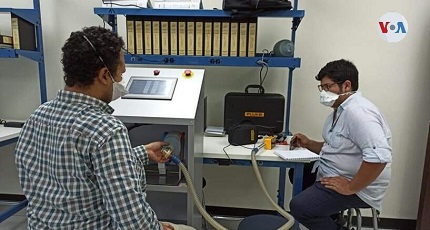
The LAGO (Latin American Giant Observatory) project traverses the skies of Latin America to set its sights on uncovering the mysteries of faraway galaxies.
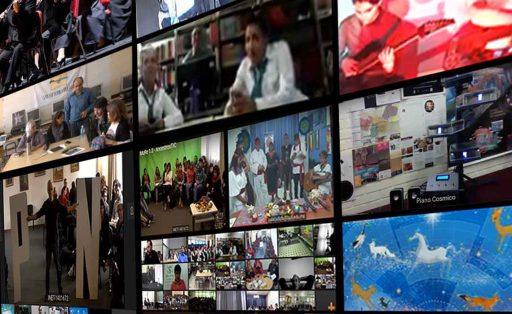
The Anilla Cultural Latinoamérica-Europa in Uruguay, a network of cultural facilities, coproduces online events using second-generation netowrking technologies and promotes both research on new uses of the Internet in cultural production and the exchange of content.
The skies of Latin America have captivated stargazers for centuries. Today, the landscape is dotted with many of the world’s most advanced and important regional, national and international observatories, providing forefront access to the heavens and beyond – enabling groundbreaking research to advance our knowledge of the universe.
The Amazon is the largest and best-known center of biodiversity on the planet, but its forests are being lost at unsustainably high rates. Ongoing research in the Ecuadorian Amazon since the mid-1990s has resulted in concrete environmental benefits for the region and is now supported by a new connection between Ecuador and the United States.
A group of 50 Brazilian researchers shall partake in the Large Synoptic Survey Telescope project, deemed as revolutionary for Astronomy. Totaling R$ 1 billion in investments, the Telescope will be able to map almost half of the sky in six filters for a period of ten years and its deluge of data will be a huge challenge for information technology.
Latin America plays a vital role in the worldwide computing grid essential for processing the massive amounts of data generated from particle smashing experiments at the Large Hadron Collider that reveal information about the origins of the Universe.